TL;DR: Built a custom intake system that turned a 100-project backlog with no visibility into a structured operation — and surfaced client workflow problems no one had seen before.
Client
American Jewish World Service (AJWS)
Role
Project & Process Manager
Context
AJWS’s communications team had recently been established as an independent division. The transition created a structural gap: a team now responsible for managing its own project portfolio, with no infrastructure to do so.
The Problem
The team was carrying over 100 open projects simultaneously with no shared tracking system, no intake process, and no visibility into status or capacity. Work arrived by email and verbal request. Internal clients had no reliable way to submit requests or check on progress. Staff spent a disproportionate amount of time in meetings, following up with clients for clarifying details, and writing status emails. Coordination had become the job, crowding out the actual work.
My Approach
- Audited the existing situation by interviewing both production staff and internal clients to map how work actually moved through the team versus how it was supposed to
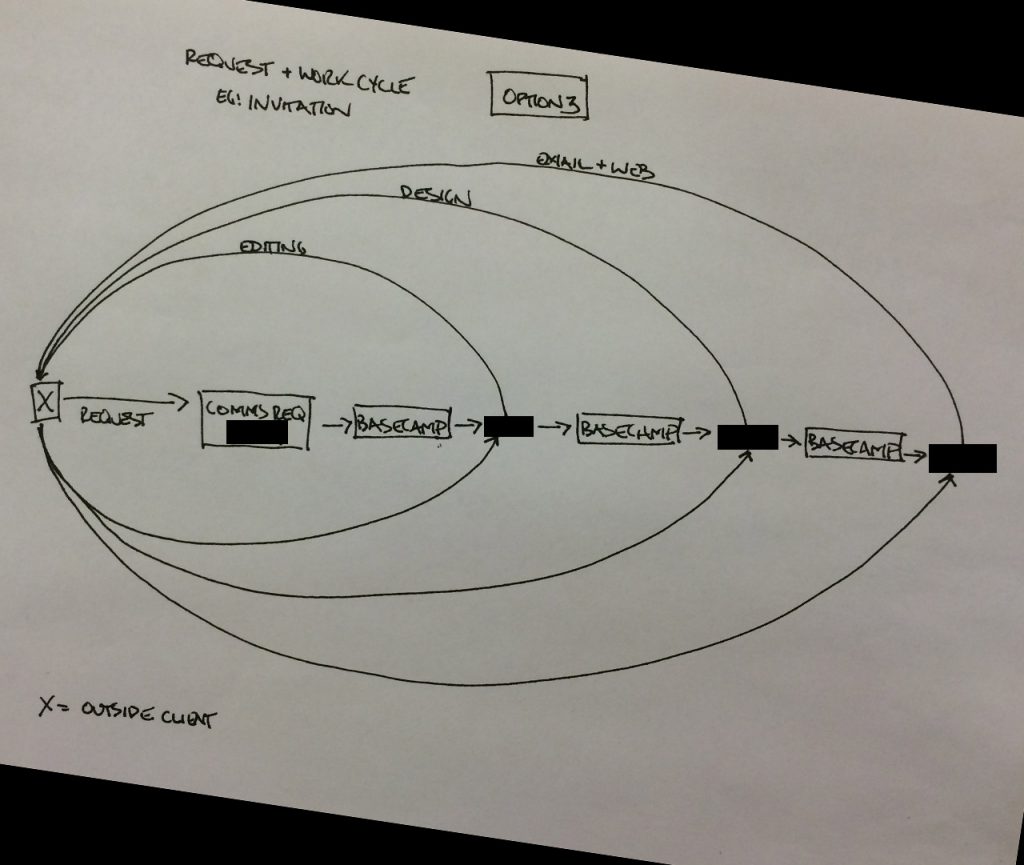
- Evaluated available platforms against the team’s specific workflow requirements and technical fluency, and implemented Basecamp as the central project hub
- Established standardized operating procedures covering project intake, assignment, review stages, approval, and delivery
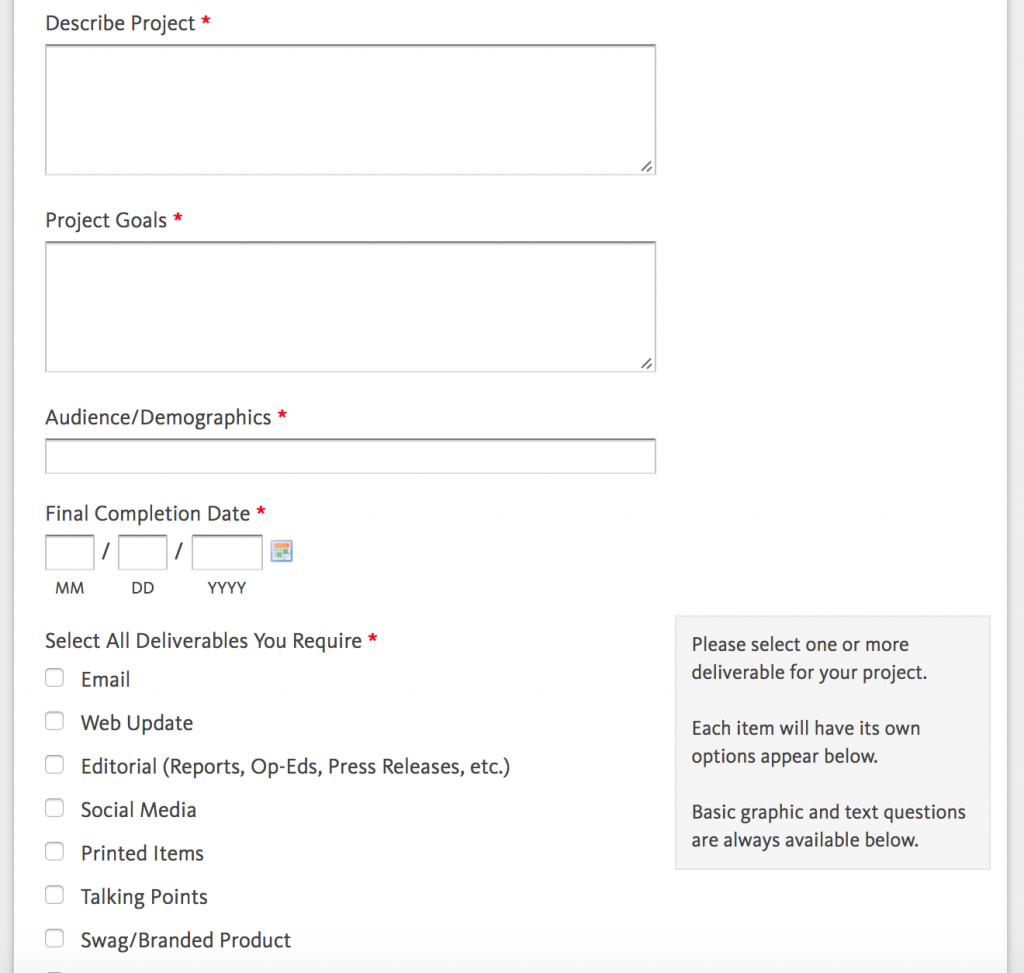
- Designed and built a custom, content-responsive web-based intake system using agile methodology, running multiple iteration cycles with input from both internal clients and production staff
- Ran structured feedback sessions after launch to identify friction points and refine the system based on real-world use rather than assumptions
Outcome
Internal clients reported the new process was faster and easier than the previous email-based system — and adopted it quickly because it was simpler and faster than open-ended email exchanges. Meeting time and email volume dropped noticeably as coordination moved into the platform. The team gained visibility into their full workload for the first time, enabling realistic capacity planning and prioritization. Importantly, the system also surfaced patterns in how different client teams submitted work: chronic issues with incomplete requests, poor scheduling, or vague briefs became visible and addressable. Rather than absorbing these problems, the team was able to work with specific clients to understand the root causes and improve their own planning and handoff processes, leading to process improvements throughout the entire organization. The division went from overwhelmed and opaque to a functional, trackable operation.