TL;DR: Coordinated visual content from 50+ agencies under a hard deadline for a landmark climate report that shaped NYC disaster policy across multiple administrations.
Client
NYC Economic Development Corporation / Mayor Bloomberg’s Office
Role
Project Manager — Visual Content
Context
In the aftermath of Hurricane Sandy, Mayor Bloomberg’s administration commissioned a comprehensive assessment of the storm’s impact on New York City and a long-term plan for building climate resilience. The resulting report — PlaNYC: A Stronger, More Resilient New York — was one of the most comprehensive urban climate documents produced by any US city. It required visual content from dozens of organizations simultaneously, coordinated under a hard political deadline.
The Problem
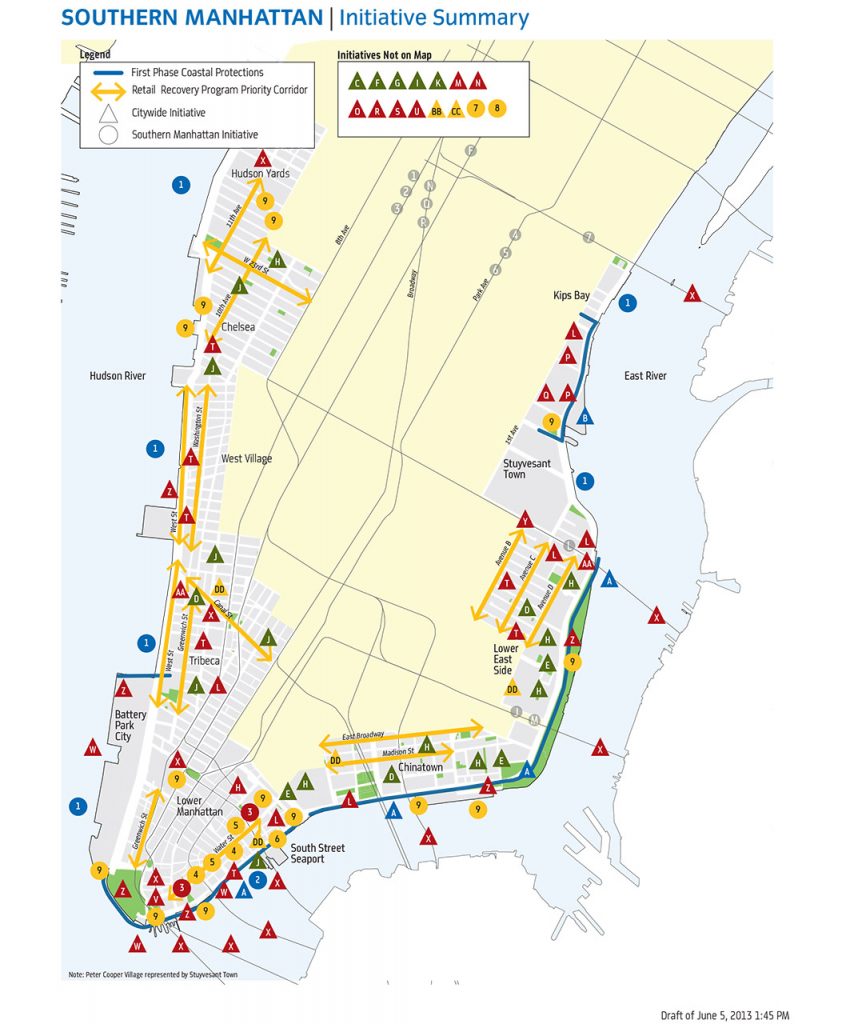
The report needed maps, photographs, diagrams, and illustrations from more than 50 contributors: city agencies, national government bodies, private contractors, and academic institutions — each with different file formats, naming conventions, approval chains, and response times. There was no system to track what had been requested, received, reviewed, or cleared for use. The design team was waiting on content with no visibility into when, or whether, it would arrive.
My Approach
- Assessed the full scope of visual content required across all report chapters and mapped every contributing organization
- Built a tracking system in Asana to manage requests, submissions, review status, and rights clearances across all 50+ contributors — giving both the project team and design team a single source of truth
- Established standard procedures for file submission, naming, and format requirements to reduce back-and-forth and re-submission cycles
- Worked directly with NYCEDC’s design team to coordinate the handoff between content receipt and layout integration
- Managed escalations and follow-up with unresponsive agencies under deadline pressure, identifying blockers early enough to find alternatives when a source couldn’t deliver
Outcome
The report was delivered on schedule — a hard deadline set by the Mayor’s office with no flexibility. All required visual content was tracked, cleared, and integrated without gaps. The Asana-based system gave the design team real-time content visibility, eliminating status check-in meetings on both sides. The SIRR report went on to shape disaster planning across the Bloomberg administration and subsequent NYC administrations; it continues to be referenced as a landmark document in urban climate resilience policy.